How to Scale Your Interior Design Firm Without Hiring More People

I'll be honest with you, there was a season in my business where every Monday morning felt like a marathon before the week even started.
Our client power "hour"? Three hours (ahem, not one). Every single week. Going through every client, every project, every update. I knew better. And yet there we were, three and a half hours deep, every Monday, without fail. Something had to change.
I recently sat down with Ellen Yin on the Cubicle to CEO podcast to talk about the structural shift that changed everything for us, the move to a pod-based team model that helped Studio 790 double revenue in two years without increasing headcount and shaved 10 to 15 hours off my own work week.
Here's what I shared.
Why the Old Way Wasn't Working
For a long time, Studio 790 operated what I call a talent-led model. When a client came in, the question was: who do they want, are they available and what does the workload look like? It's a puzzle you're constantly trying to piece together, and honestly, it works, until it doesn't.
The inefficiency wasn't obvious at first. It crept in slowly. Meetings got longer. Decision-making got murkier. And I found myself stuck in the day-to-day execution of the business instead of leading it.
I knew there had to be a better way to serve our clients with the same level of excellence while building something more focused and efficient internally.
The question that kept popping into my head was how do I scale this interior design firm? That's when I went back to something I learned years ago.
Where the Pod Idea Came From
Before Studio 790, I was the Vice President of Client Relations at a social media firm. We ran pods. At the time I didn't think much of it, you don't always see the value of an experience while you're in it. But when I found myself staring down a team restructure, it came back to me.
Nothing in our lives gets wasted. The things you learn in your 20s, in your 30s, in jobs you thought had nothing to do with where you were headed, they show up again. That experience showed up for me in a big way.
How to Scale Your Interior Design Firm: What a Pod Structure Actually Looks Like
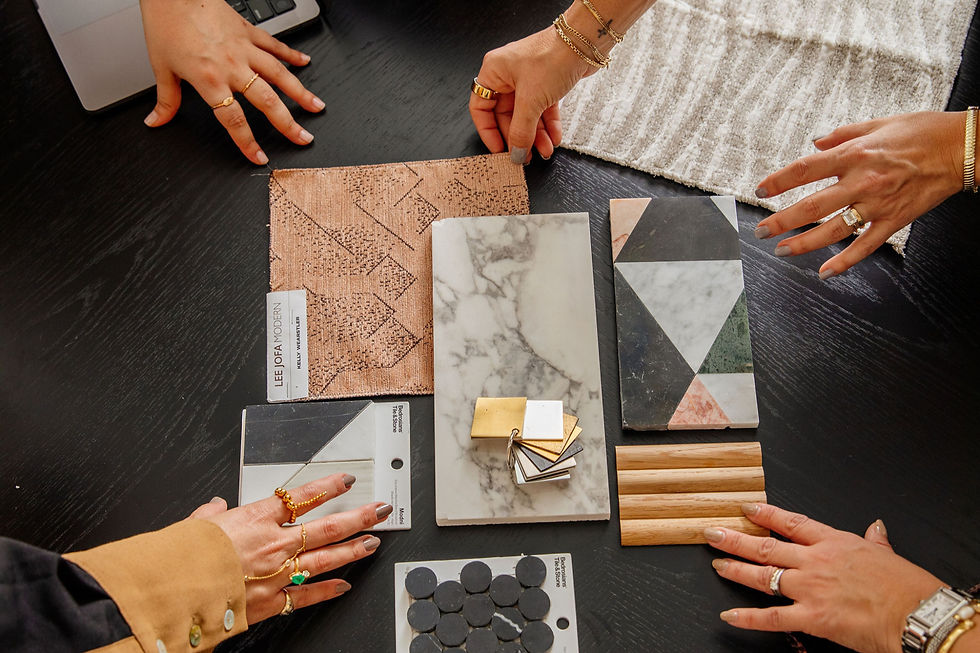
A pod is simple. At Studio 790, each pod consists of a lead designer and a junior designer. That's your core unit. They are assigned a set of clients and they own those projects day in, day out.
Then we have cross-pod support roles that span across both pods: project management, procurement and purchasing, accounting and bookkeeping, and now a finance role we're bringing on. These people don't belong to one pod, they belong to the whole team. And that distinction matters more than I initially realized.
What happened to those three-hour Monday meetings? They became one hour. Thirty minutes per pod. That's it.
The Thing Most People Get Wrong About Scaling
When most people think about growth, they think about adding more. More pods, more designers, more people. And sometimes that's the right move.
But what I've learned and what I shared on the podcast is that the next logical step isn't always adding a pod. Sometimes it's adding the right support role so your existing pod can breathe, lead with their strengths and ultimately take on more.
My designers are brilliant creatives. They are not, by their own admission, finance people. So when I bring on a dedicated finance person, I'm not just taking budget management off their plate, I'm giving them back a percentage of their day that they can pour back into client work. That's scaling deeper, not just wider.
What This Meant to Me Personally

The goal was never just efficiency for efficiency's sake. It was to build a business that didn't require me to be in every room, on every call, making every decision.
I stepped back from direct client work. I now oversee our creative department. I give final approval, I'm deeply involved with our platinum-level clients but the day-to-day? The pods handle it. They know our systems, our culture, our standards. They know their lane. And when people know their lane, they don't just execute. They own it. That's where the magic happens.
A Few Things I Want You to Take Away From This
If you're running a design firm, an agency, a service business, the pod model can translate. Here's what I'd encourage you to sit with:
Define your client value tiers. Not every client needs the same level of support. When you define who your platinum, gold and silver clients are, you can make smarter decisions about which resources go where.
Look at your cross-functional roles first. Before you add another pod or another lead, ask yourself what's slowing your current team down. The answer is often a support role, not another senior hire.
Give your team time to find their rhythm. I'd say it takes about a year for a pod to really hit their stride together. The first few months are learning. Months six through twelve, they're finding their flow. Year two, they're crushing it. Don't flip-flop the structure before you've given it a real chance..
Be honest about what you don't know. I don't have all the answers, and I'm not pretending to. I might hire an admin thinking that's the next right move, the whole team might agree with me, and then six months later we realize we actually needed a finance person. That's not failure, that's being an entrepreneur. The willingness to course-correct without making it mean something about your worth as a leader? That's the job.
Want to Hear the Full Conversation?
The full episode dives into much more! We get into client assignment strategy, how I think about when a pod has hit capacity and what the next phase of growth looks like for Studio 790.
To hear the full episode, you'll need to become a premium subscriber at Cubicle to CEO.
And if you're an interior designer, this one's for you. Inside Project to Profits™, you'll learn how to turn every completed install into a long-term marketing asset that keeps working for your business long after reveal day is over. No paid ads. No dancing reels. No posting 24/7. Just strategic organic marketing that compounds over time.
Click here to learn more about Project to Profits™.